

Tuesday 12 May 2026
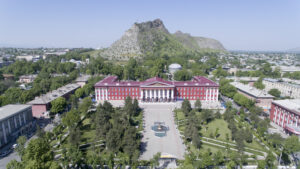
Location: Osh State University – Main Building, Room 117
| 09:00 am Opening Session (1 hr.) | |
| Welcome | Osh State University |
| Introduction to GEWEX | Peter van Oevelen |
| Future Water Resources of Central Asia – Policy Issues | Michael Brody |
First Working Session (5–6 hrs.)
Xin Li + colleagues – Institute of Tibetan Plateau Research
Accessing and utilizing datasets from the Third Pole Environment (TPE) Data Repository, specifically tailored to regional needs.
Introduction to their eco-hydrological model for the Tibetan Plateau river basin and its potential application in the endorheic river basins of the Pan-Third Pole region, with the theme of improving understanding of water resources in Central Asia.
Advancing Data for Periglacial Environment with Remote Sensing Big Data – Min Feng
National Tibetan Plateau/Third Pole Environment Data Center (TPDC) – Min Feng
L2 Training Materials
Hands-On with TPDC_Platform Workflows and Water Body Change Monitoring Tutorial (introduction)– Xiaoduo Pan
Hands-On with TPDC: Platform Workflows and Water Body Change Monitoring Tutorial (method) – Xiaoduo Pan
L3 Training Materials
Introduction to the Distributed multi-sphere hydrological model (WEB-DHM) – Baohong Ding
Main Content of the WEB-DHM Model Training – Baohong Ding
Wrap up (30 min.)
Wednesday 13 May 2026
Location: Osh State University – Main Building, Room 117
Finding the Right Cadence: Pairing Compute, Ambition, and Realities to Create Decision- Relevant Climate Data across Central Asia – Stefan Rahimi
09:00 am Opening (1 hr.)
Stefan Rahimi (Remote), University of Wyoming
Regional Downscaling Modeling for Central Asia – Summary of work to date
Second Working Session (5–6 hrs.)
Ben Jarihani – James Cook University
Overview emerging satellite platforms for hydrological monitoring. These include precipitation missions soil moisture sensors, evapotranspiration products, terrestrial water storage, altimetry systems, and snow monitoring platforms to better quantify snow water equivalent and mountain water storage—critical for the Syr Darya and Amu Darya “water towers.” Plus, the role of cloud-based platforms such as Google Earth Engine (GEE), and advances in AI and machine learning that simplify remote sensing workflows for non-expert users.
Topography:
Earth Observation & Digitalisation in Environmental Studies and Modern Agriculture – Ben Jarihani
ENviroVision Consulting – Ben Jarihani
Practical Exercises
Wrap up (30 min.)
Thursday 14 May 2026
Location: Osh State University – Main Building, Room 117
09:00 am Opening
The last day of the 4th Workshop on Central Asia will focus on integration of the demonstrated analytical approaches and planning for specific project collaborations.